Securing Cryptocurrency Wallets Against AI Drainers
Imagine waking up to find your entire crypto portfolio wiped out overnight. No hack on a big exchange. No lost phone. Just a clever trick that used artificial intelligence to empty your wallet while you slept. This isn’t science fiction—it’s happening right now to everyday people holding Bitcoin, Ethereum, Solana, and other digital assets. AI drainers represent one of the fastest-growing threats in the crypto world, and understanding how to protect yourself has never been more important.
In this comprehensive guide, we’ll walk through everything you need to know about these sophisticated attacks and, more importantly, practical steps you can take today to keep your funds safe. Whether you’re a complete beginner with a few hundred dollars in a software wallet or a seasoned holder with significant assets across multiple chains, these strategies will help you stay one step ahead.
Crypto isn’t going anywhere, but neither are the bad actors looking to steal it. By the end of this post, you’ll have a clear action plan for securing cryptocurrency wallets against AI drainers that actually works in 2026 and beyond.
What Exactly Are AI Drainers and Why Should You Care?
AI drainers are malicious tools designed specifically to steal cryptocurrency directly from your wallet. Unlike old-school hacks that tried to guess passwords or steal private keys, these attacks trick you into giving permission for the theft yourself—often without realizing it until it’s too late.
Traditional drainers have been around since about 2022, but AI has supercharged them. Scammers now use artificial intelligence to:
- Create super-realistic fake websites that look identical to popular NFT marketplaces, airdrop platforms, or DeFi apps
- Generate deepfake videos of celebrities or project founders promoting “exclusive” opportunities
- Write personalized phishing messages that sound like they come from your friends or trusted support teams
- Build malicious browser extensions or mobile apps that bypass app store security checks
- Craft smart contracts that automatically drain the most valuable assets first
Recent reports show wallet drainer attacks stole close to $500 million in 2024 alone, with numbers climbing even higher in 2025 as AI tools became cheaper and more accessible on the dark web. One group using AI-generated Firefox extensions managed to drain over $1 million from users thinking they were installing legitimate wallet tools.
The scary part? These attacks don’t require advanced technical skills anymore. Drainer-as-a-Service (DaaS) platforms let even low-level criminals rent ready-made tools for a cut of the profits. AI just makes everything faster, more convincing, and harder to spot.

Image credit: Wallet Scam: A Case Study in Crypto Drainer Tactics by Check Point Research
If you’re thinking “It won’t happen to me,” consider this: Many victims were experienced users who simply clicked one wrong link or approved one transaction too quickly. The human element remains the weakest link, and AI is getting better at exploiting it every single day.
How AI Drainers Actually Work – Step by Step
Understanding the attack flow helps you spot the red flags before they cost you money. Here’s the typical process these drainers follow:
- The Lure: You see a message on X (formerly Twitter), Discord, Telegram, or even email. It might promise a free NFT airdrop, a “verified” token claim, or an urgent security update for your wallet. AI helps craft these messages to feel personal and time-sensitive.
- The Fake Site: Clicking takes you to a website that looks 99% like the real thing—same colors, logos, even working chat support (run by AI bots). The URL might be off by one character, but you’re excited and don’t notice.
- Wallet Connection: The site asks you to “connect” your wallet to claim rewards or verify ownership. This is where many software wallets like MetaMask or Phantom pop up a connection request.
- The Malicious Approval: Once connected, the site prompts you to sign a transaction. It might say “Confirm Claim” or “Approve Access.” What you’re actually signing is a smart contract that gives the attacker permission to move your tokens or NFTs.
- The Drain: Within seconds, the drainer scans your wallet for the highest-value assets and sweeps them to the attacker’s address. Some advanced versions even use multiple hops across chains to make tracking harder.
AI improves every step. It can generate hundreds of fake sites daily, create voice clones for “support calls,” and even predict which users are most likely to fall for specific lures based on their online behavior.
One real example involved fake Firefox extensions for MetaMask and Phantom wallets. The attackers used AI to code convincing descriptions and bypass review processes, stealing funds from thousands before the extensions were taken down.
Real Stories: How People Lost Everything to AI Drainers
Let’s look at a few cases that highlight how these attacks play out in real life.
In early 2025, a group called GreedyBear used over 150 fake browser extensions to drain more than $1 million. Victims thought they were enhancing their wallet security or adding new features. The extensions looked legitimate, complete with user reviews generated by AI.
Another campaign targeted Solana users through compromised Discord servers. Fake “project updates” led to sites that drained wallets after users signed what looked like a simple gas approval. Total losses exceeded several hundred thousand dollars in just weeks.
Even high-profile figures haven’t been immune. Mark Cuban and Seth Green both lost significant amounts in earlier drainer attacks, showing that no one is completely safe without proper precautions.
These stories aren’t meant to scare you—they’re meant to prepare you. Every single victim thought they were being careful. The difference now is having the right knowledge and tools.

Image credit: Crypto theft statistics chart from TRM Labs 2026 Crypto Crime Report
Why Your Current Setup Might Not Be Enough
Many people rely on basic security like a strong password and two-factor authentication (2FA). That’s good, but it’s no longer enough against AI drainers.
Software wallets connected to the internet are always at risk. Browser extensions can be compromised. Even “secure” mobile apps have been faked in app stores.
The rise of AI means scammers can now:
- Personalize attacks using data scraped from your social media
- Create deepfakes that fool even skeptical users
- Automate the entire process so one attacker can target thousands simultaneously
Traditional antivirus software often misses these because they don’t look like classic malware—they’re smart contracts and web-based tricks.
This is exactly why securing cryptocurrency wallets against AI drainers requires a layered approach that goes beyond what worked in 2020 or even 2023.
Core Strategies for Securing Cryptocurrency Wallets Against AI Drainers
1. Switch to Hardware Wallets for Serious Holdings
If you hold more than a few hundred dollars worth of crypto, a hardware wallet is non-negotiable in 2026.
Devices like Ledger and Trezor keep your private keys completely offline. Even if you visit a fake site and try to sign a malicious transaction, the hardware device will show you exactly what’s happening on its own screen. You physically confirm or reject it.

Image credit: Trezor vs Ledger hardware wallets comparison
Pro tips for hardware wallet setup:
- Buy directly from the manufacturer’s official website (never third-party sellers on Amazon or eBay)
- Verify the device authenticity using the official app when you first receive it
- Practice with small test transactions first
- Never enter your seed phrase on any computer or phone
For even better protection, consider multisig setups where multiple hardware devices must approve large transactions.
2. Master Your Seed Phrase Like Your Life Depends On It
Your seed phrase (also called recovery phrase) is the master key to your wallet. If someone gets it, they own everything—no questions asked.
Never store it digitally. No photos. No cloud notes. No encrypted files (unless using specialized offline tools).
Best practice: Use metal backup plates that you stamp your words into. These survive fire, water, and time better than paper.

Image credit: Metal seed phrase backup plate example from Safe Seed on Amazon
Split your seed phrase across multiple secure locations using the Shamir’s Secret Sharing method if you’re holding large amounts. Store copies with trusted family members in different cities.
And remember the golden rule: If anyone ever asks for your seed phrase—even someone claiming to be support—it’s a scam. Legitimate companies never need it.
3. Revoke Approvals Religiously
This is one of the most overlooked but critical steps in securing cryptocurrency wallets against AI drainers.
Every time you connect to a DeFi site, NFT marketplace, or game, you’re giving “approvals” that let that contract spend your tokens. Many approvals are unlimited, meaning they can drain your entire balance anytime.
Scammers love finding old approvals from sites you visited once and never thought about again.
Use free tools like Revoke.cash or the built-in features in wallets like Trust Wallet to regularly check and revoke permissions.
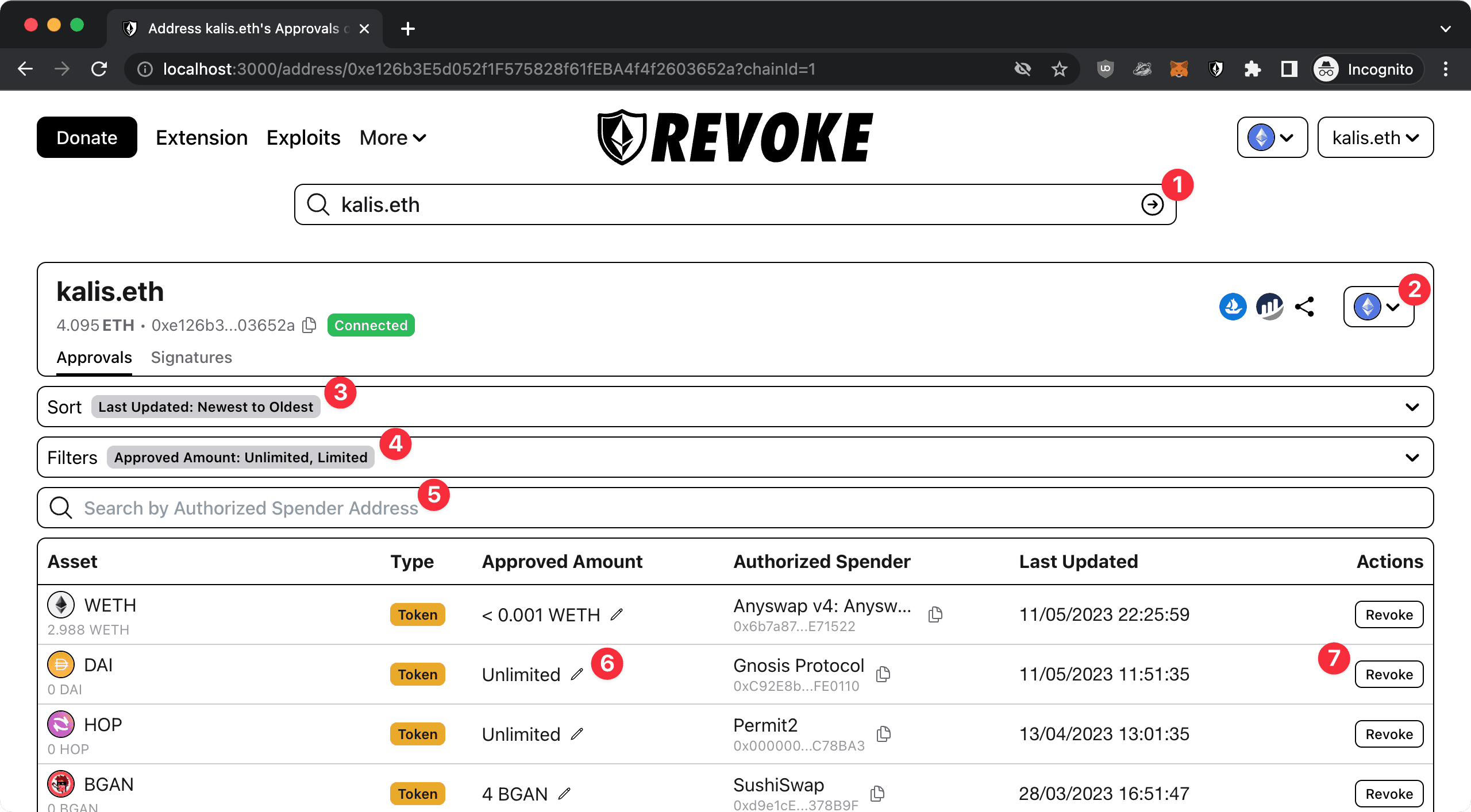
Image credit: Revoke approvals dashboard from Revoke.cash
Make it a monthly habit. Spend 10 minutes reviewing everything. It’s boring but could save you thousands.
4. Verify Everything – Twice
Before connecting your wallet to any site:
- Type the URL manually instead of clicking links
- Check for HTTPS and look closely at the domain (realexample.com vs reaiexample.com)
- Search for the project on official channels first
- Use tools like Scam Sniffer browser extension for real-time warnings
For transactions, always read the details carefully on your hardware wallet screen. Does it say “Send 50 ETH to unknown address”? Reject it immediately.
5. Use Multiple Wallets for Different Purposes
Don’t keep everything in one place. Create a system:
- Hot wallet (small amounts): For daily trading and DeFi interaction
- Cold wallet (majority of funds): Hardware only, rarely connected
- Backup wallets: For specific chains or long-term holds
This way, if one wallet gets compromised through a clever AI trick, you don’t lose everything.
6. Enable All Available Security Features
- Use app-based 2FA (not SMS) everywhere possible
- Set up transaction simulation in advanced wallets to preview what you’re actually signing
- Enable wallet address whitelisting where available
- Use privacy-focused browsers or VPNs when interacting with crypto sites (but research the VPN first)
7. Stay Updated But Skeptical
Follow official project channels, but verify announcements through multiple sources. AI makes fake news and deepfake videos incredibly convincing.
Join legitimate communities, but never click random links shared there. When in doubt, do nothing.
Advanced Protection Techniques
For those with larger portfolios or who want maximum security:
Multisignature (Multisig) Wallets: Require approval from multiple devices or people before moving funds. Great for families or small teams.
Dedicated Devices: Use a separate laptop or phone just for crypto transactions. Never use it for browsing social media or email.
Transaction Monitoring Services: Tools that alert you to any suspicious activity on your addresses.
Insurance Options: Some platforms now offer crypto insurance for specific risks, though coverage for drainer attacks varies.
Air-gapped Signing: The ultimate level where you generate and sign transactions completely offline.
These might seem overkill for small holders, but as your portfolio grows, so should your security habits.
Tools and Resources Worth Using in 2026
- Hardware Wallets: Ledger Nano X/S, Trezor Model T, Coldcard for Bitcoin maximalists
- Approval Managers: Revoke.cash, DeBank, Zapper
- Scam Detection: Scam Sniffer, Wallet Guard, Etherscan token approval checker
- Portfolio Trackers with Alerts: Zerion, Delta, or on-chain tools like Nansen (paid)
- Seed Storage: Billfodl, Cryptosteel, or Safe Seed plates
- Browser Extensions: uBlock Origin, MetaMask with enhanced security settings
Always verify download links from official sources.
For learning more:
- Ledger Academy Security Section
- Chainalysis Crypto Crime Reports
- Official documentation for your specific wallet
Common Mistakes That Get People Drained
- Clicking links from unsolicited DMs
- Using public WiFi for transactions
- Keeping large amounts in exchange wallets
- Ignoring hardware wallet confirmation screens
- Reusing the same seed phrase across multiple wallets
- Falling for “urgent” support messages
- Not checking transaction details carefully
Avoid these and you’ve already eliminated 80% of common attack vectors.
Looking Ahead: The Future of Wallet Security
As AI gets smarter, so will the defenses. We’re already seeing:
- Wallets with built-in AI that simulate transactions and flag risks
- Zero-knowledge proofs for privacy and security
- More widespread adoption of account abstraction that makes approvals safer
- Better regulatory frameworks that might help track drainers
But technology alone won’t save you. The fundamentals—caution, verification, and offline storage—will always matter most.
Your Action Plan Starts Today
Don’t wait until after an attack. Here’s what to do right now:
- Audit all your wallets and revoke old approvals
- Move significant holdings to a hardware wallet if you haven’t already
- Create or update your seed phrase backups using metal plates
- Set up a routine for monthly security checks
- Practice safe habits with small test amounts
- Bookmark this guide and share it with friends who hold crypto
Securing cryptocurrency wallets against AI drainers isn’t about being paranoid—it’s about being prepared. The crypto space offers incredible opportunities, but only for those who respect the risks and take security seriously.
Your funds, your responsibility. Take control today, and sleep better knowing you’ve done everything possible to protect what you’ve worked hard to build.
Stay safe out there, and remember: When something sounds too good to be true in crypto, it almost always is.
Share this content:











Post Comment