Best SIEM Tools with Built in AI for Small Teams
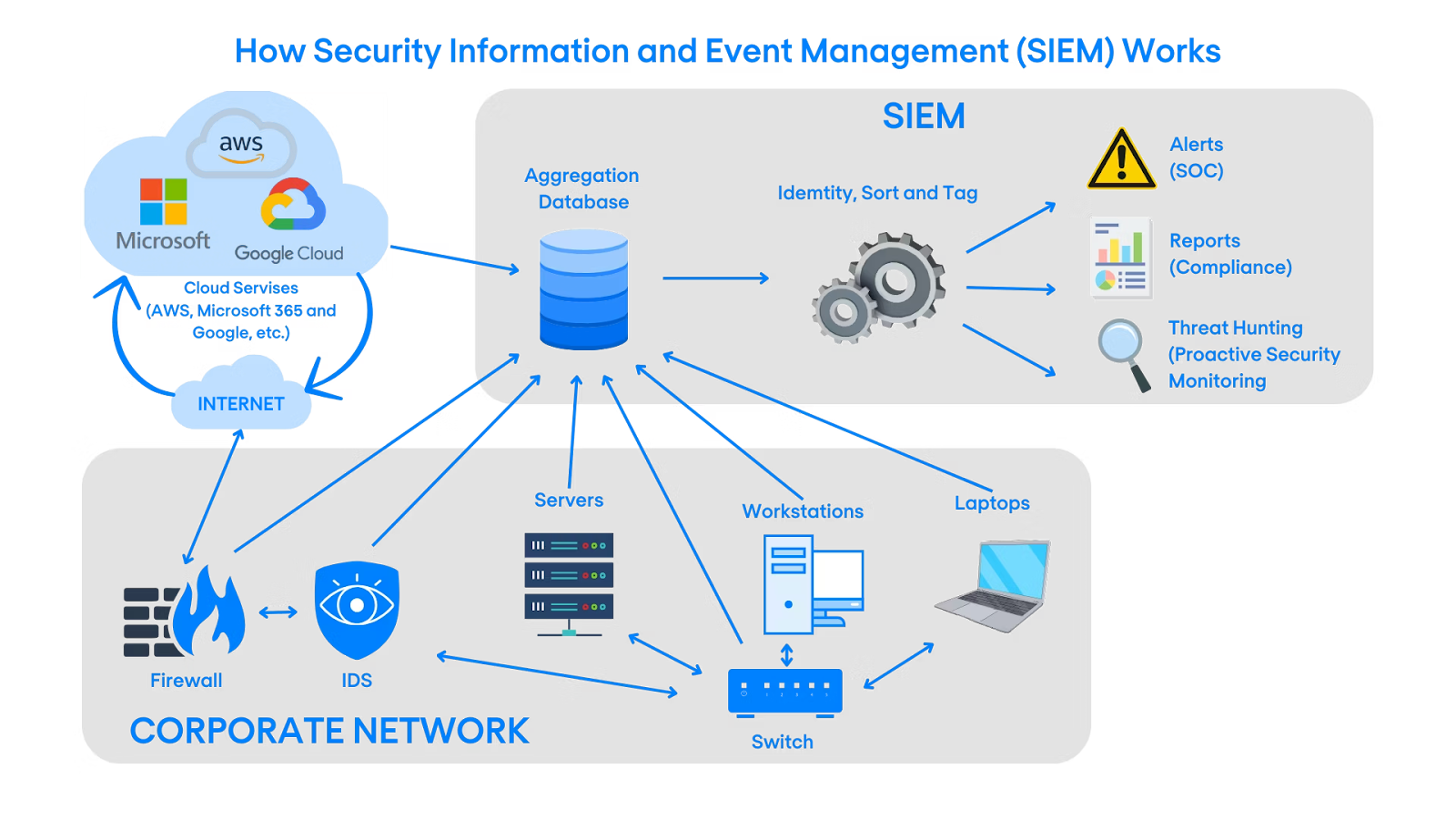
Small teams today deal with the same cyber threats as large companies—ransomware, phishing campaigns, sneaky insider issues—but without huge budgets, dedicated security staff, or 24/7 monitoring. That’s why SIEM tools with built-in AI have become game-changers. These platforms collect logs from your servers, cloud services, endpoints, and apps, then use artificial intelligence to detect real threats, reduce noise from false alerts, and even suggest quick fixes.
In 2026, the best SIEM tools with built-in AI are cloud-native, easy to set up, and priced in ways that don’t break small budgets (think pay-per-GB ingested or per-user models). They use machine learning to learn your normal patterns and flag only what’s suspicious, saving your team hours of manual work.
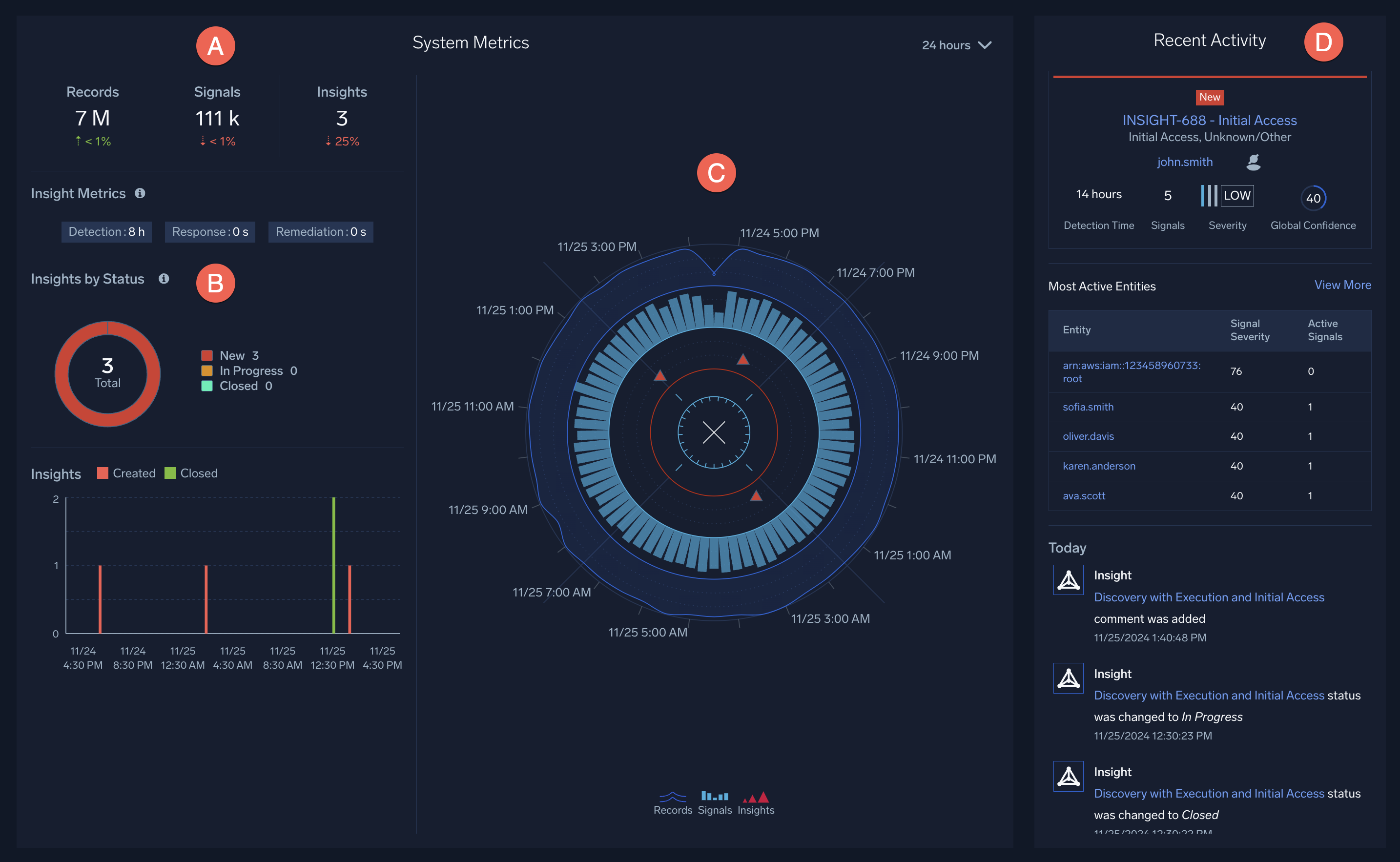
Image credit: Sumo Logic Cloud SIEM dashboard example – https://help.sumologic.com/img/cse/cloud-siem-hud.png
This kind of clean, AI-prioritized view is exactly what small teams need—no more drowning in thousands of daily alerts.
Why Small Teams Should Care About SIEM Tools with Built-in AI
Traditional SIEMs were built for big enterprises with SOC teams that could handle endless alerts. For a team of 5–30 people juggling IT, development, and security, that model fails fast. You get overwhelmed, miss real threats, or burn out.
AI flips the script by:
- Spotting anomalies (weird login times, unusual data downloads) that rule-based systems miss.
- Cutting false positives by 70–90% in many cases through behavioral learning.
- Automating triage, grouping related events into real incidents.
- Offering natural language queries so anyone can ask “show me suspicious logins this week” without learning complex syntax.
Small teams also get better compliance (GDPR, PCI, SOC 2) with automated reports and visibility across hybrid setups (cloud + on-prem).

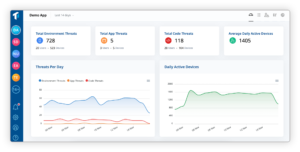
Image credit: Classic SIEM dashboard overview – media.licdn.com
Modern dashboards like this pull everything together so your team sees the big picture quickly.
1. Microsoft Sentinel – Top Pick for Microsoft-Centric Small Teams
If your stack includes Microsoft 365, Azure AD, or Defender, Sentinel is often the easiest and most powerful starting point. It’s a cloud SIEM on Azure with heavy AI baked in.
Key AI features include:
- Fusion technology that correlates signals across sources to detect multi-stage attacks.
- Machine learning anomaly detection for user behavior, network traffic, and more.
- Built-in threat intelligence from Microsoft’s global view.
- Automated playbooks for response (block IP, reset password, etc.).
Pricing is usage-based—pay for data ingested and analyzed. Small teams keep costs low by starting with key connectors and using built-in free analytics rules.
Pros for small teams:
- Integrates seamlessly with Office 365, Teams, and endpoints.
- Huge library of pre-built detections and connectors.
- Good free trial and community content.
Cons:
- Can get pricey with very high data volumes.
- Less ideal if you’re fully AWS or Google Cloud.
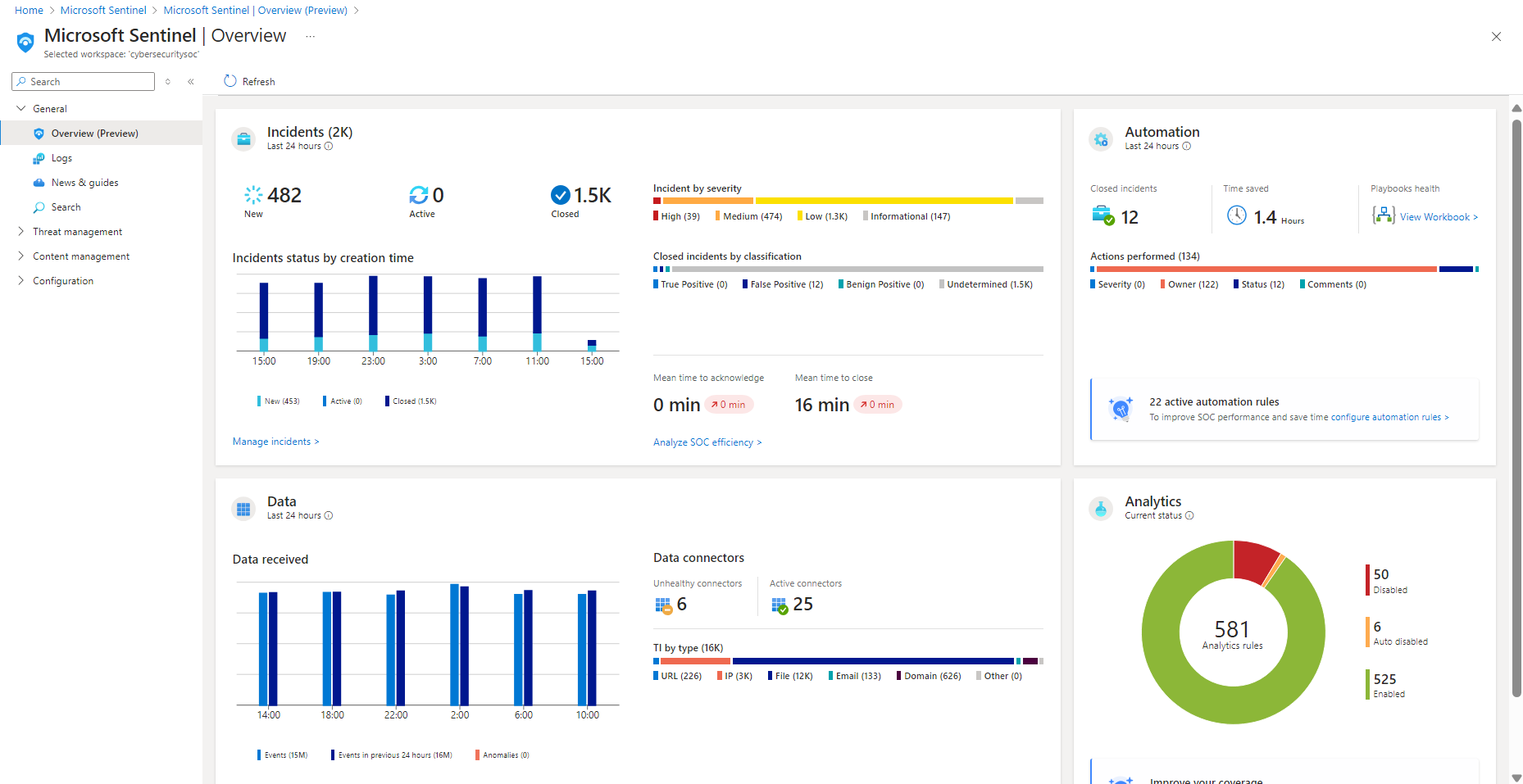
Image credit: Microsoft Sentinel Overview dashboard
This is a real-world Sentinel view showing incidents, severity, and automation stats—perfect for quick checks.
Read more on the official page: Microsoft Sentinel.
(Internal link: Check our related post on Microsoft 365 security tips for small businesses.)
2. SentinelOne Singularity AI SIEM – Best for Endpoint-Heavy Environments
SentinelOne started as an EDR leader but expanded into full SIEM tools with built-in AI. Their Singularity platform uses AI for everything from detection to autonomous response.
Standout AI parts:
- Purple AI for asking questions in plain English (“what changed on this server last night?”).
- Hyperautomation that isolates threats or rolls back ransomware automatically.
- Behavioral analysis across endpoints, cloud, and identity.
For small teams, it’s great because it reduces the need for separate tools—endpoint + SIEM in one. Deployment is fast, and pricing is competitive.
Pros:
- Low false positives thanks to deep behavioral AI.
- Unified view reduces tool-switching.
- Strong autonomous remediation.
Cons:
- Shines brightest if you use their EDR; third-party integrations are good but not as seamless.
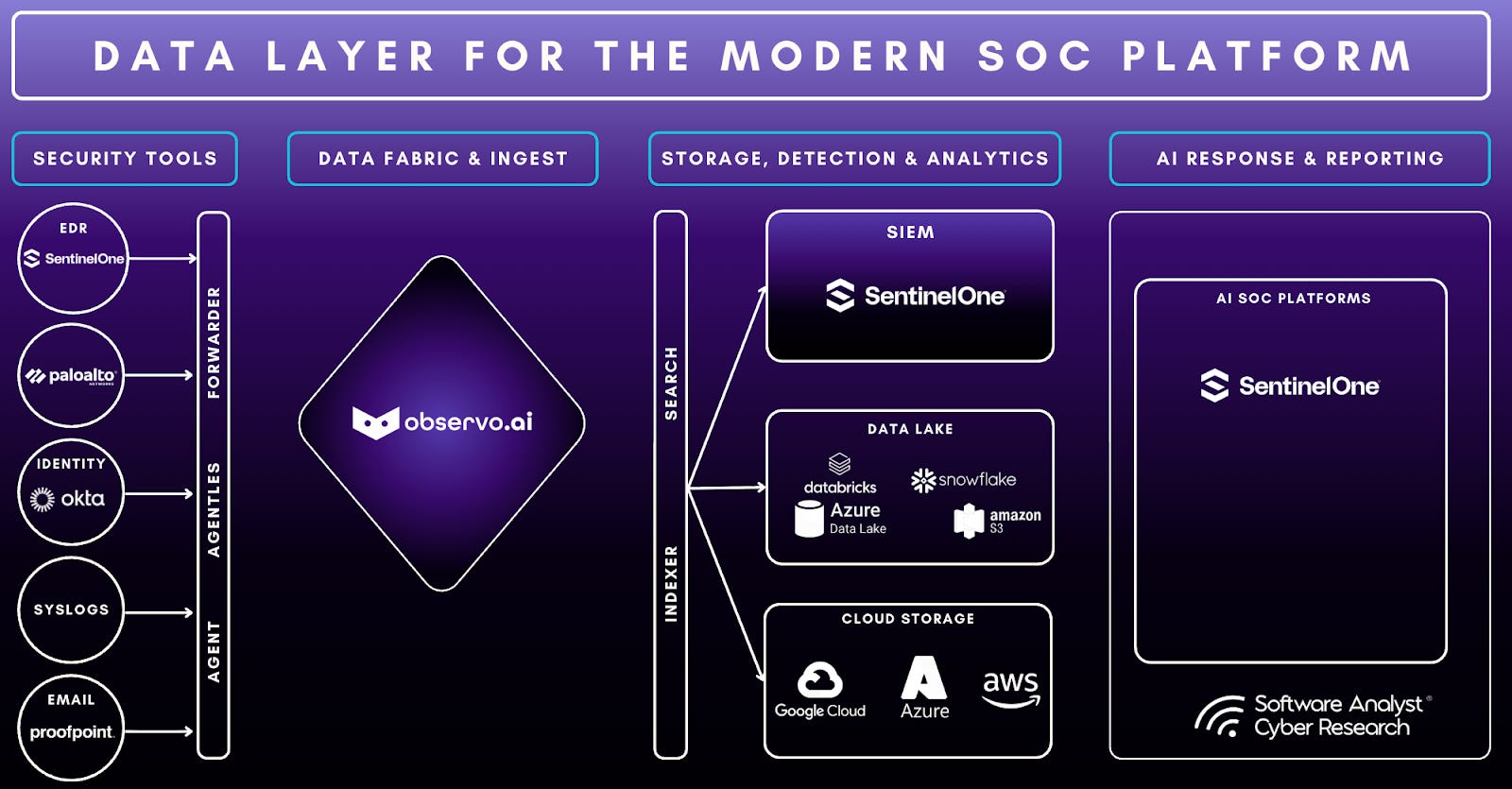
Image credit: SentinelOne AI SIEM architecture –
This diagram shows how SentinelOne connects data sources into an AI-powered SOC.
Official details: SentinelOne Singularity.
3. Panther – Ideal for Cloud-Native and Dev-Friendly Teams
Panther is a modern, open-detection SIEM built for AWS but supporting multi-cloud. It uses AI for alert triage and prioritization while letting you write custom detections in Python or YAML.
AI highlights:
- Triage Agent scores alerts by real risk level.
- ML-based anomaly detection on cloud logs.
- Detection-as-code for version control and testing.
Small teams love the pay-what-you-use model and low ops overhead. If your team has some dev skills, it’s powerful.
Pros:
- Flexible and transparent.
- Great for AWS-heavy or multi-cloud setups.
- Strong compliance support.
Cons:
- Custom rules need some coding (but tons of pre-built ones exist).
Learn more: Panther SIEM.
4. Exabeam – Strong Behavioral AI for Insider Threat Focus
Exabeam pioneered UEBA (user and entity behavior analytics) and builds it into their Fusion SIEM.
AI strengths:
- Builds baselines of normal behavior per user/device.
- Creates smart timelines for investigations.
- Generative AI to summarize incidents in plain language.
For small teams worried about cloud misconfigs or insider risks, it’s excellent. SaaS model keeps things simple.
Pros:
- Best-in-class behavioral detection.
- Cuts investigation time dramatically.
Cons:
- Can feel a bit more enterprise-oriented.
Details: Exabeam.
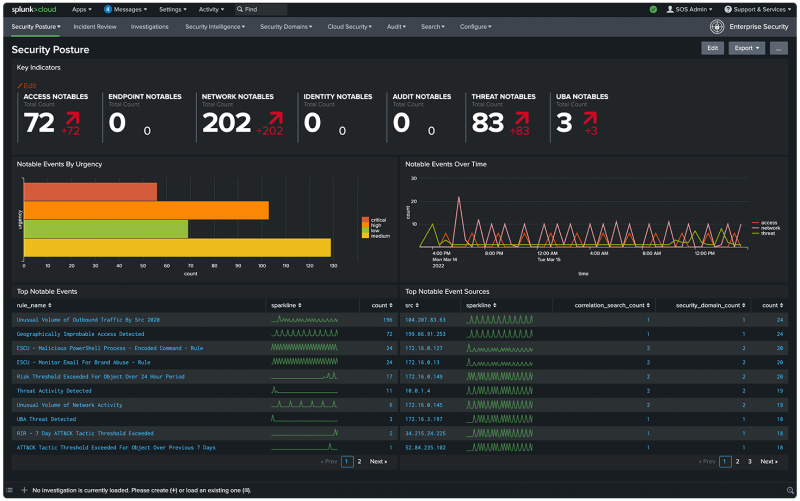
Image credit: Example of advanced SIEM notables dashboard – www.splunk.com
5. Securonix – AI-Reinforced for Hybrid and Compliance Needs
Securonix delivers next-gen SIEM with ML at the core for threat hunting and noise reduction.
Features include:
- AI-driven triage and prioritization.
- Generative AI for natural queries during investigations.
- Strong in cloud, identity, and on-prem coverage.
Good pricing flexibility and compliance depth make it fit small-to-mid teams.
Pros:
- Transparent and scalable.
- Excellent at catching unknown threats.
Cons:
- Slight learning curve to unlock full value.
Check it out: Securonix.
Quick Comparison Table & Other Options
- Microsoft Sentinel: Best Microsoft integration.
- SentinelOne: Best autonomous response.
- Panther: Best detection-as-code.
- Exabeam: Best behavioral/insider focus.
- Securonix: Best hybrid compliance.
Honorable mentions: Elastic Security (free/open base), Google Chronicle (Google Cloud users), ConnectWise SIEM (MSP-friendly).
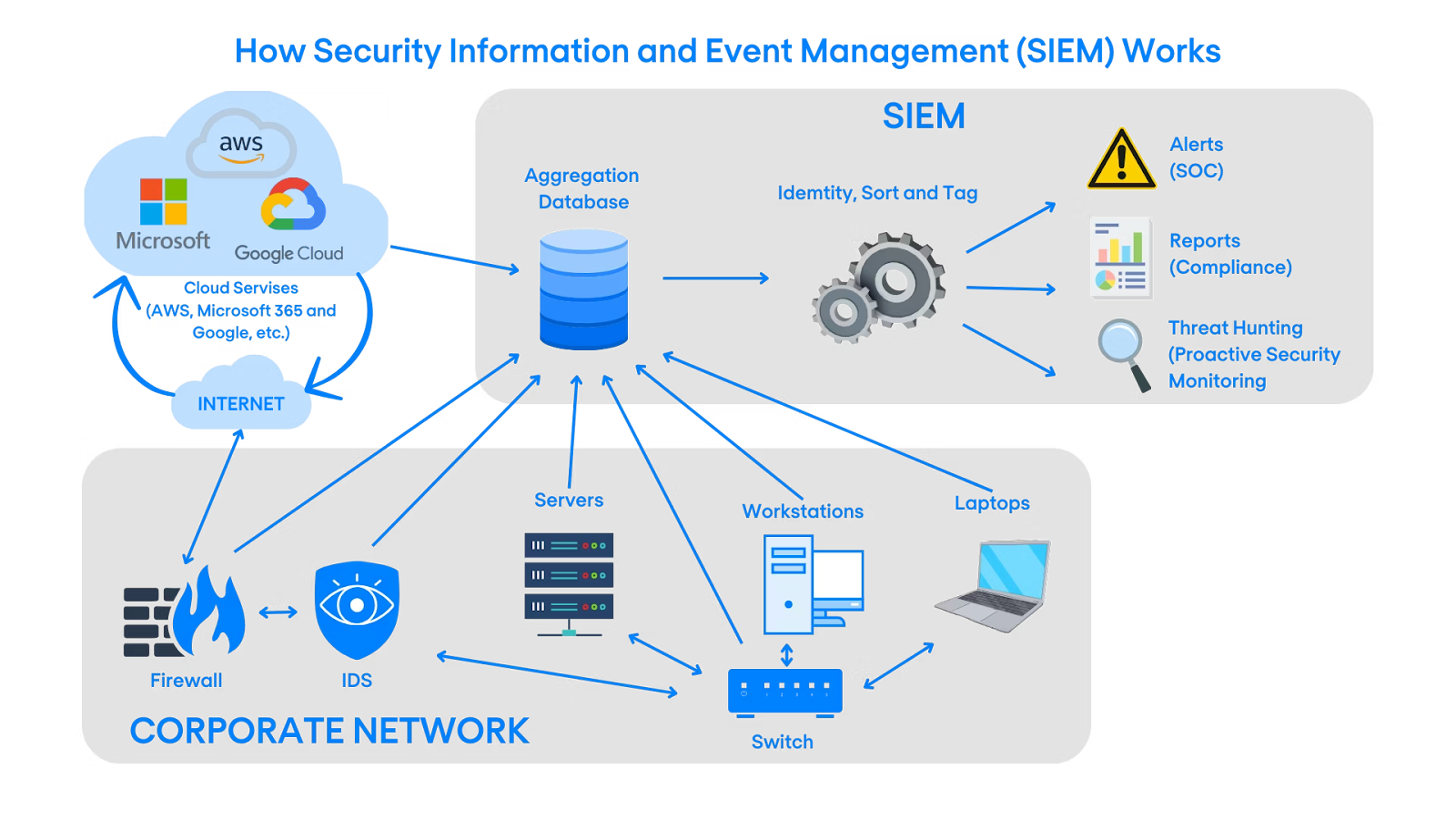
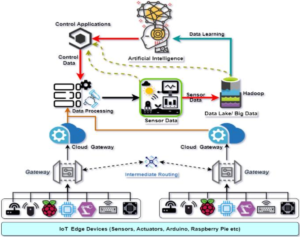
Image credit: SIEM architecture overview – cdn.prod.website-files.com
This shows how data flows into a modern SIEM—key for small teams planning setup.
How to Pick the Right One for Your Small Team
Ask yourself:
- What’s your main cloud provider?
- Budget per month? (Start under $500–$2000 realistic for small ingestion.)
- Do you need heavy automation or behavioral focus?
- Trial first—most offer 14–30 days with your real data.
Start small: Ingest critical logs (M365, endpoints, firewall), tune AI rules, add more sources gradually.
Wrapping Up
SIEM tools with built-in AI level the playing field for small teams in 2026. You get smart detection, less noise, and faster response without needing a full SOC. Pick one that matches your stack, test it, and you’ll sleep better knowing threats get caught early.
Which tool are you considering? Drop a comment below—I’d love to hear your thoughts!
Share this content:






Post Comment