Geopolitical Cyber Fragmentation
The world we live in today is more connected than ever, but that connection is starting to crack. Imagine the internet not as one big global highway, but as a bunch of separate roads, each controlled by different countries with their own rules and barriers. That’s what’s happening with geopolitical cyber fragmentation. It’s a shift where nations are pulling apart the once-unified digital space to protect their interests, leading to what experts call the “Splinternet.” This isn’t just tech jargon—it’s affecting how we share information, do business, and even stay safe online.
In this post, we’ll explore what geopolitical cyber fragmentation means, why it’s happening, real-world examples, and how countries and companies are responding by building digital sovereignty. Whether you’re a business owner worried about data laws or just someone who uses the internet daily, understanding this could help you navigate the changes ahead.
Understanding Geopolitical Cyber Fragmentation
Geopolitical cyber fragmentation refers to the way global politics is breaking up the internet into smaller, more controlled pieces. Instead of one open network where data flows freely across borders, we’re seeing walls go up. Governments are stepping in to regulate data, block foreign tech, and create their own digital ecosystems. This fragmentation comes from a mix of security concerns, economic competition, and ideological differences.
Think about it like this: back in the early days of the internet, it was designed to be borderless. Data could zip from New York to Tokyo without anyone asking for a passport. But now, with rising tensions between superpowers like the US and China, countries are treating the digital world like territory to defend. For instance, export controls on tech like semiconductors and AI are creating separate tech bubbles. These moves aren’t just about trade—they’re reshaping how the internet works.
One key driver is sovereignty. Nations want control over their data to protect citizens from cyber threats and foreign influence. But this leads to a patchwork of rules that makes it harder for global companies to operate. If you’re running an online store, you might have to store customer data in one country while following privacy laws from another. It’s complicated, but it’s the new reality.
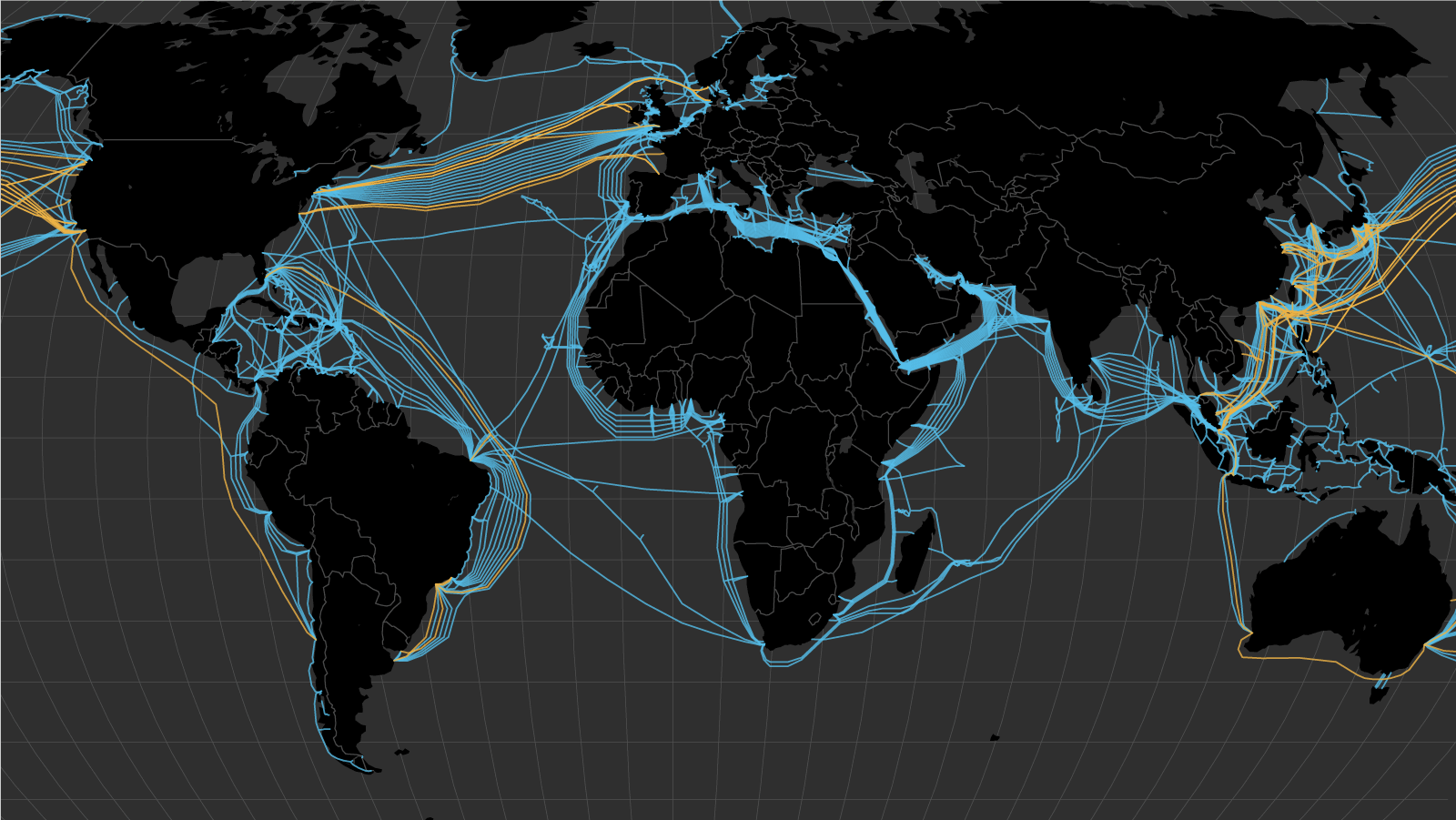
Image credit: cltc.berkeley.edu
The Emergence of the Splinternet
The term “Splinternet” describes this splintered version of the internet. It’s like the web is balkanizing—splitting into regional or national networks that don’t always play nice with each other. This isn’t a new idea; it started gaining traction around 2010 when experts warned about geographic and commercial divides. Today, it’s accelerated by geopolitics.
In the Splinternet era, countries like China have built massive firewalls to control what people see online. Russia’s been testing ways to disconnect from the global internet during crises. Even democratic regions like Europe are pushing for data localization to keep information within borders. This fragmentation isn’t just technical—it’s political. As one report puts it, the internet is becoming a battleground for power struggles between ideological blocs.
Why does this matter? A unified internet fostered innovation and global trade. But a Splinternet could slow that down. Businesses might face higher costs to comply with multiple standards, and users could end up with limited access to information. On the flip side, it might boost local tech industries in some places.
For more on how the Splinternet is damaging society, check out this insightful piece from MIT Sloan. (External link: MIT Sloan on Splinternet impacts)
If you’re interested in how this ties into broader cybersecurity trends, read our internal guide on cybersecurity basics for beginners.

Real-World Examples of Geopolitical Cyber Fragmentation
Let’s look at some concrete cases to see how this is playing out.
China’s Great Firewall and Tech Ecosystem
China is the poster child for cyber fragmentation. Through its Great Firewall, the government blocks foreign sites like Google and Facebook, forcing users onto local alternatives like Baidu and WeChat. This isn’t just censorship—it’s about building a self-sufficient digital economy. Export controls from the US have pushed China to develop its own chips and AI, further isolating its tech from the West.
The result? A massive, innovative but closed system. While this protects China from external threats, it also limits global collaboration. For businesses, selling tech to China means navigating strict data laws that require local storage.
Russia’s Push for Internet Independence
Russia has been working on a “sovereign internet” since 2019, allowing it to disconnect from the global web if needed. During the Ukraine conflict, this became more urgent. Cyberattacks spiked, and Russia blocked platforms like Instagram to control narratives. It’s not just defense—it’s about asserting control amid geopolitical tensions.
This fragmentation affects everyday people. Russians might access a limited version of the internet on mobile, as seen in recent shutdowns. For companies, it means rethinking supply chains to avoid sanctions.
The European Union’s Data Sovereignty Efforts
Europe is taking a different approach, focusing on regulations like GDPR to protect privacy. But with rising US-China tensions, the EU is pushing for “digital sovereignty” through initiatives like the European Open Digital Ecosystem. This includes building local cloud services to reduce reliance on American giants like Amazon and Microsoft.
A key example is the push for EuroCloud, a space-based data system to ensure control over critical infrastructure. While this fosters innovation, it risks creating barriers for global firms.
US-China Tech Decoupling
The US has banned exports of advanced tech to China, leading to a split in AI and semiconductors. This geopolitical rivalry is fragmenting global supply chains. Companies like Huawei are caught in the middle, banned in some countries while thriving in others.
Other nations, like India, are caught in the crossfire, balancing between US alliances and Chinese investments.
For a deeper dive into how China, Russia, India, and the EU are strategizing, see this report from IFRI. (External link: IFRI on Internet Fragmentation)
We also have an internal post on global data privacy laws that complements this.
Other Global Hotspots
In Africa and the Middle East, internet shutdowns during protests are common, creating temporary fragments. For example, Iran’s blackouts limit access to global info. In Ukraine, cyber warfare has disrupted infrastructure, showing how geopolitics turns digital spaces into battlefields.
These examples show fragmentation isn’t uniform—it’s shaped by local politics and global pressures.
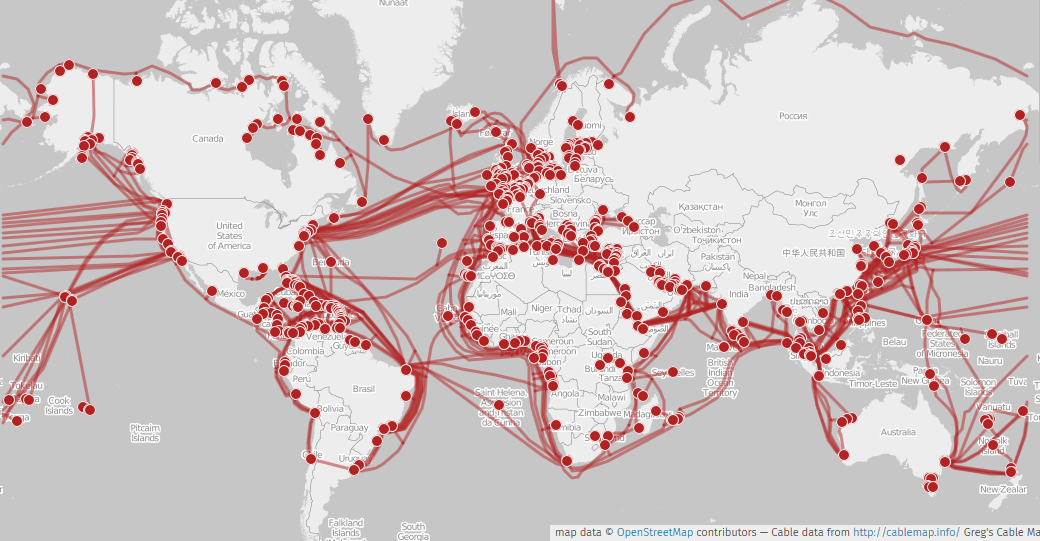
Impacts of Geopolitical Cyber Fragmentation
This shift has wide-reaching effects.
On Businesses
Companies face higher compliance costs. Multinationals must adapt to varying data laws, potentially duplicating infrastructure. Innovation slows as tech ecosystems diverge—think separate AI models trained on fragmented data, leading to “antagonistic AI.”
Small businesses suffer more, lacking resources to navigate this. But opportunities exist in local markets, like Europe’s push for indigenous tech.
On Individuals
Users might see a less open internet. In fragmented regions, access to global content drops, affecting education and free speech. Cyber risks rise as state-sponsored attacks increase. Privacy improves in some places but at the cost of convenience.
Economic and Security Ramifications
Globally, fragmentation could cost trillions, echoing the 2008 crisis. Security-wise, it weakens collective defense against threats like malware that ignore borders.
For tips on protecting your business, visit our internal cybersecurity checklist.
Building Digital Sovereignty: Strategies and Solutions
Digital sovereignty is the answer many are turning to—control over your digital assets without full isolation.
Defining Digital Sovereignty
It’s about having agency over data, infrastructure, and tech. Not just governments—companies too. As one expert says, it’s rebalancing tech distribution to create local providers.
Steps for Nations
- Invest in Infrastructure: Build local clouds and data centers. Europe’s doing this with GAIA-X.
- Harmonize Regulations: Avoid over-fragmentation by standardizing rules, like the EU’s AI Act.
- Foster Open Source: Use open tech for flexibility.
- International Cooperation: Join alliances like the Five Eyes for shared threat intel.
- Promote Innovation: Fund R&D to compete globally.
For countries, using digital public goods can help. (External link: Digital Public Goods Alliance)
For Businesses
- Assess dependencies: Map out where your data lives.
- Diversify providers: Use multi-cloud setups.
- Comply smartly: Invest in tools for automated compliance.
- Build resilience: Train staff on cyber risks.
Our internal guide to cloud migration can help here.
Role of Technology
AI and blockchain can aid sovereignty by enabling secure, decentralized systems. But they must be governed carefully to avoid further splits.

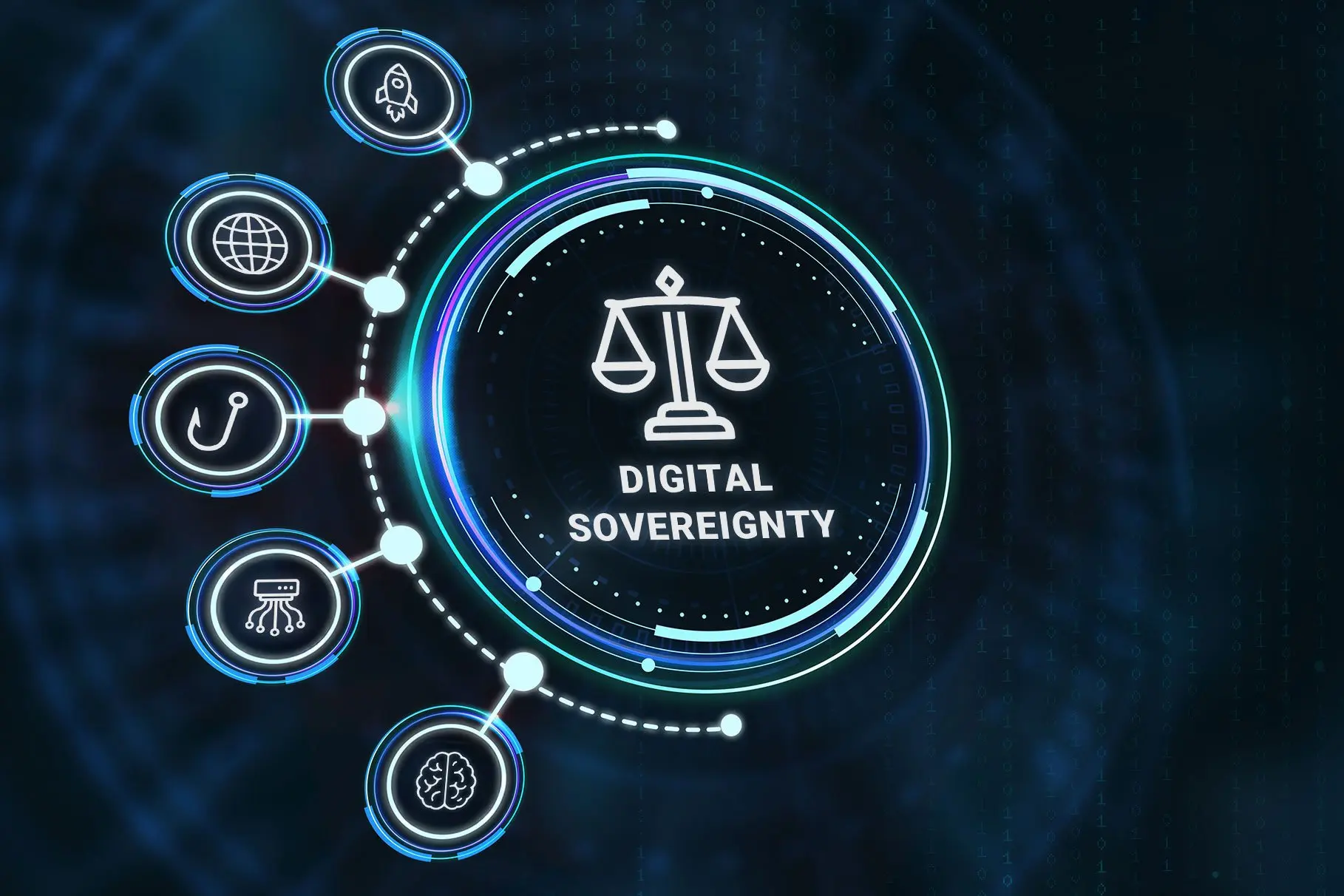
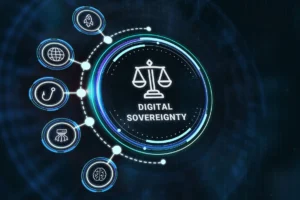
Image credit: it-sa 365, illustrating digital sovereignty with icons like scales and networks.
Challenges in Achieving Digital Sovereignty
It’s not easy. Regulatory complexity can stifle innovation. Geopolitical tensions make cooperation hard. Plus, smaller nations lack resources to build independent systems.
Future outlook: Fragmentation might worsen with AI races and wars, but global threats like pandemics could push for unity.
For a full report on foreign policy in a fragmented internet, read this from the Council on Foreign Relations. (External link: CFR Task Force Report)
Conclusion
Geopolitical cyber fragmentation is reshaping our digital world into a Splinternet, where building digital sovereignty is key to survival. From China’s walled garden to Europe’s regulatory push, nations are prioritizing control amid rising threats. While this brings challenges like higher costs and limited access, it also opens doors for local innovation and better security.
The key is balance—protecting sovereignty without closing off the world. As users and businesses, staying informed and adaptable will help us thrive. What do you think about this trend? Share in the comments.
For more insights, check our related post on emerging cyber threats.
Share this content:





Post Comment