Protect Your Crypto Wallet from Drainer Attacks
If you own any crypto at all, learning to protect your crypto wallet is not optional anymore. It is the most important skill you can build in 2026. This guide explains everything in plain English—no tech jargon, no complicated steps you will forget. You will learn exactly what drainer attacks are, how they catch people, the warning signs, and dozens of simple habits that keep your money safe. By the end, you will feel confident every time you open your wallet app.
Crypto feels exciting. Prices move fast, new projects pop up every day, and the idea of owning digital money without banks sounds freeing. But there is a dark side that hits harder every year. Scammers use something called drainer attacks to empty wallets in seconds. These attacks do not need your password or seed phrase. They trick you into clicking “confirm” on a fake site or app, and suddenly your funds are gone.
What Exactly Is a Drainer Attack?
Picture this. You get a message on Twitter or Discord: “Claim your free 1000 tokens now!” The link looks real. It takes you to a site that looks exactly like Uniswap or OpenSea. You connect your wallet because you have done it a hundred times before. Then a pop-up asks you to “approve” something. You click yes without reading every word. Boom—your entire balance starts moving to a stranger’s address.
That is a drainer attack. The bad guys create malicious smart contracts or scripts that wait for you to give permission. Once you sign that one transaction, the script automatically pulls everything it can—ETH, USDT, NFTs, even tokens on other chains. No hacking your computer. No stealing your seed phrase. Just one careless click.
These attacks exploded in popularity because they are cheap and easy for scammers to set up. They rent “drainer-as-a-service” kits on the dark web. The kit handles the technical part; the scammer only needs to spread fake links. In 2024 alone, drainers stole close to 500 million dollars from more than 300,000 wallets. Even in 2025 the numbers dropped to around 84 million, but that still means thousands of people lost life-changing money.
The scary part? Anyone can fall for it. Big holders, small holders, beginners, and even famous people have been hit. The attackers do not care how much you have—they take whatever is there.
How Drainer Attacks Actually Work Step by Step
Let’s break it down like a story so it sticks in your mind.
- The bait: Scammers post on social media, send DMs, or buy fake ads. They pretend to be a popular project, a giveaway, or even customer support. “Your wallet won an airdrop—connect here to claim!”
- The fake site: The link opens a perfect copy of a real website. Same colors, same logos, sometimes even the same domain but with one tiny spelling mistake you miss when you are excited.
- Wallet connection: You click “Connect Wallet.” Your real wallet pops up and asks for permission to view your address. That part is normal and harmless.
- The dangerous signature: Here comes the trick. Another pop-up appears: “Approve transaction” or “Permit spending.” The wording is confusing on purpose. Many people think it is just for the airdrop. In reality, this signature gives the drainer unlimited power to move your assets.
- The drain: Within seconds, bots sweep your wallet. They check every token, every NFT, and transfer them to mixing services that hide the trail. You refresh your wallet and see zero balance.
Some drainers even work across chains—Ethereum, Solana, Binance Smart Chain—all at once. Others use “permit” functions that let them act without another signature. That is why the money disappears so fast.
Common Ways People Get Hit in 2026
Drainers keep changing, but the tricks stay similar. Here are the ones you will see most often:
- Fake airdrops and giveaways: “Connect to claim your 500 USDT reward.” These are everywhere on Telegram and X.
- Compromised influencer accounts: A famous crypto person’s Twitter gets hacked. They post a link to a “new project.” Followers trust it.
- Malicious browser extensions: You search for “MetaMask helper” and install something that looks useful. It quietly watches for wallet connections.
- Fake apps on app stores: Scammers upload look-alike wallet or trading apps. Google Play and Apple sometimes miss them for weeks.
- Phishing emails or Discord bots: “Urgent: Your wallet is at risk. Verify now.”
- Malvertising: Google ads or YouTube ads that lead straight to drainer sites.
One big trend right now is “social engineering” combined with drainers. Scammers pretend to be job recruiters or startup founders. They ask you to test software and pay you in crypto. The software is malware that steals wallet data or forces a drainer connection.

Real Stories That Show Why You Must Protect Your Crypto Wallet
Mark Cuban lost almost 900,000 dollars when he connected to a fake site. Seth Green lost valuable Bored Ape NFTs the same way. These are not random small losses. Regular people lose their entire savings too.
In one 2025 case, a single drainer took 55 million dollars in one go. Another group used fake Firefox extensions and stole over a million dollars before anyone noticed. On Solana, “CLINKSINK” drainers hit hundreds of users for 900,000 dollars combined.
These stories are not to scare you. They are to show that smart people get tricked when they are in a hurry or excited. The good news? Every single one of those losses could have been avoided with the habits you are about to learn.
Early Warning Signs Your Wallet Might Be Targeted
Spotting trouble before it happens saves everything. Watch for these red flags:
- You receive sudden messages from “support” or “projects” you never joined.
- A site asks for your seed phrase or private key (legit sites never do this).
- Transaction pop-ups appear that you did not expect.
- Your wallet shows approvals for contracts you do not recognize.
- Small test transactions from unknown addresses appear in your history (this is “address poisoning” to trick copy-paste).
- Urgency pressure: “Claim before it expires in 5 minutes!”
- The site has no verified contract on Etherscan or looks brand new.
If anything feels off, close the tab immediately. Better to miss a fake airdrop than lose real money.
The #1 Rule to Protect Your Crypto Wallet: Never Rush
Rushing is the number one reason people lose funds. Scammers create fake urgency on purpose. Take three deep breaths. Ask yourself: “Would I click this if it was my bank account?” If the answer is no, walk away.
Choose the Right Wallet Type – The Foundation of Safety
Not all wallets are equal when it comes to protection.
Hardware wallets (cold storage) are your best friend for larger amounts. Devices like Ledger or Trezor keep your private keys offline. Even if you visit a malicious site, the drainer cannot sign transactions without you physically confirming on the device screen.
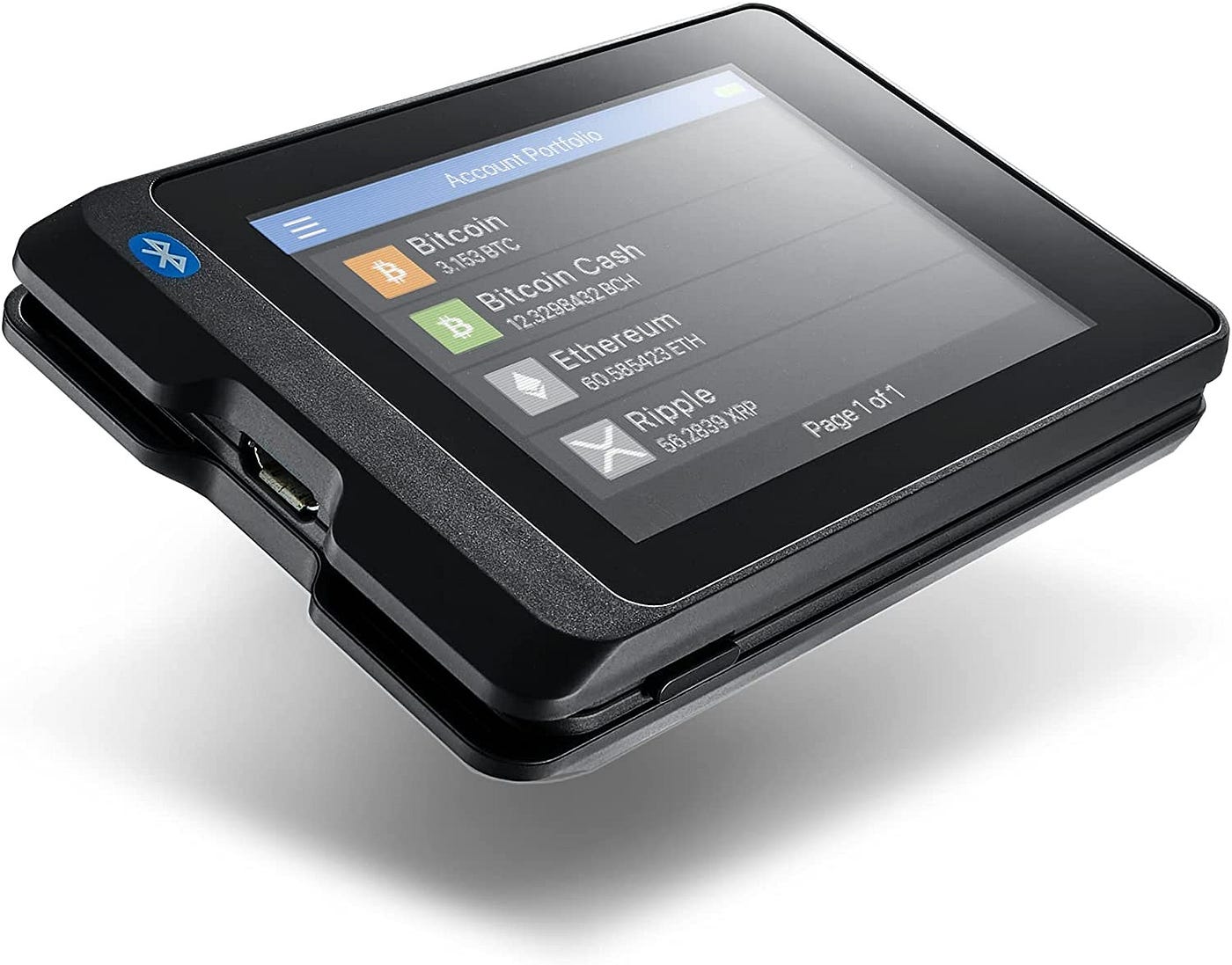
Image credit: Medium article on best cold wallets (stock photo of hardware device)
Why does this work so well? Because the keys never touch the internet. Drainers need you to sign from a hot wallet (software on your phone or computer). Move only small amounts to hot wallets for daily use. Keep the rest in cold storage.
Software wallets are convenient but riskier. Use them only for small amounts you can afford to lose. Popular ones like MetaMask, Phantom (for Solana), or Trust Wallet have good security features if you use them right.
Multi-signature wallets add another layer. They require two or more approvals before any transaction. Great for teams or big holdings.
How to Store Your Seed Phrase Safely (This One Habit Saves Millions)
Your seed phrase is the master key to everything. Write it down on paper or metal plate. Store it in two different safe physical locations—never on your phone, computer, or cloud.
Never type it into any website, even if it says “recovery.” Never take a photo of it. Never share it, not even with “support.”
Many people lose everything because they stored the seed phrase in Notes app or emailed it to themselves. Do not be that person.
Never Connect Your Wallet Unless You Are 100% Sure
This simple rule stops 90% of drainer attacks.
- Bookmark official sites only. Type the address yourself instead of clicking links.
- Check the URL twice. Look for https and exact spelling.
- Use official project links from CoinMarketCap or the real Twitter account.
- For new projects, create a brand-new empty wallet just for testing. Send only a tiny amount first.
If a site asks you to connect and you feel any doubt, do not do it. There is always tomorrow.
Master Token Approvals – The Hidden Danger Most People Ignore
Here is something huge that almost nobody talks about enough. Every time you use DeFi or NFTs, you “approve” a contract to spend your tokens. Many approvals are unlimited. Drainers look for those unlimited approvals and drain everything without another signature.
You must check and revoke approvals regularly.
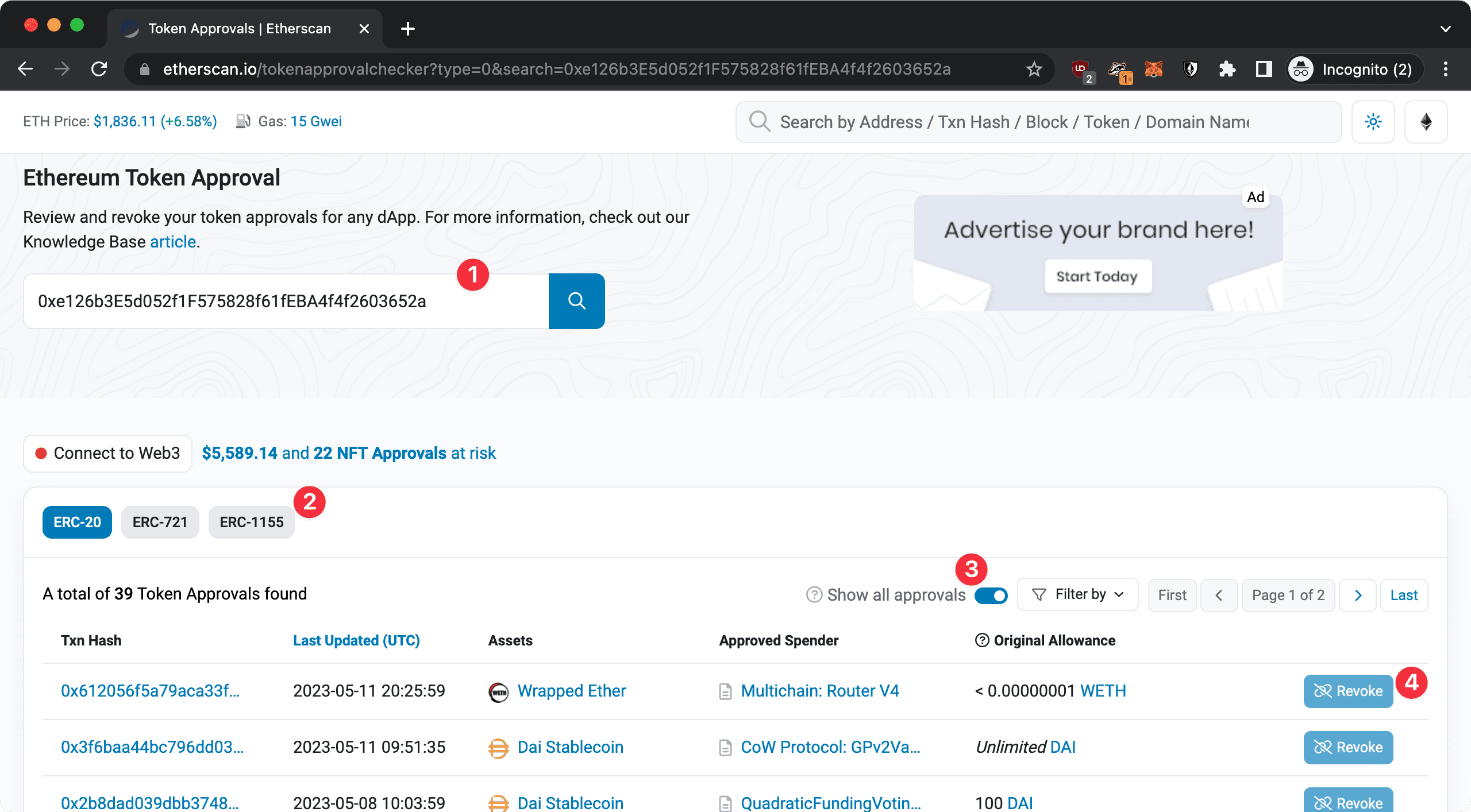
Image credit: Revoke.cash token approval checker interface
Go to revoke.cash or the built-in checker in your wallet. Connect your address. It shows every approval. Revoke anything you do not recognize or no longer need. Do this once a month or after using any new dApp.
It takes two minutes and can save your entire portfolio.
Use Security Tools That Do the Work for You
Several free or cheap tools make protecting your crypto wallet much easier:
- Wallet Guard or similar browser extensions that scan sites before you connect.
- Etherscan / Polygonscan to verify contracts.
- Anti-malware software updated daily.
- VPN when using public Wi-Fi.
- Hardware wallet apps with official firmware only.
Turn on all available security settings inside your wallet—transaction previews, simulation tools, etc.
Daily Habits That Keep Your Crypto Wallet Safe
Make these automatic:
- Check your wallet balance every morning. Any surprise movement? Act immediately.
- Enable 2FA everywhere possible (even though drainers do not need passwords, it protects related accounts).
- Never click links in DMs or emails about crypto.
- Use different wallets for different purposes (one for trading, one for holding, one for testing).
- Update your wallet apps and phone OS the day updates come out.
- Backup your hardware wallet recovery phrase in metal and test restoring it once a year.
- Teach family members the basics so they do not click bad links on your shared computer.
Advanced Ways to Protect Your Crypto Wallet for Bigger Holdings
If you have more than a few thousand dollars in crypto, go further:
- Use a dedicated computer or phone only for crypto transactions.
- Set up multisig with family or trusted friends.
- Air-gapped signing for very large moves.
- Insurance services that cover certain wallet hacks (check coverage for drainers carefully).
- Monitor services that alert you to any movement in your addresses.
What to Do Right Now If You Think You Were Drained
Act in the first minutes:
- Disconnect every dApp from your wallet.
- Transfer any remaining funds to a new safe wallet immediately.
- Revoke all approvals from the old address.
- Take screenshots of everything.
- Report to the platform (if it was a fake dApp), to local police, and to blockchain analytics firms like Chainalysis or local cybercrime units.
- Change all related passwords.
Recovery is hard and often impossible, but quick action can save what is left.
The Future of Wallet Security – Why 2026 Is a Turning Point
Wallets are getting smarter. Many now show transaction simulations before you sign. Projects are adding better warnings. Regulators are cracking down on drainer services.
But the attackers are also getting better at using AI to create perfect fake sites. The only thing that never changes is human caution. The people who protect their crypto wallet with simple daily habits will always stay ahead.
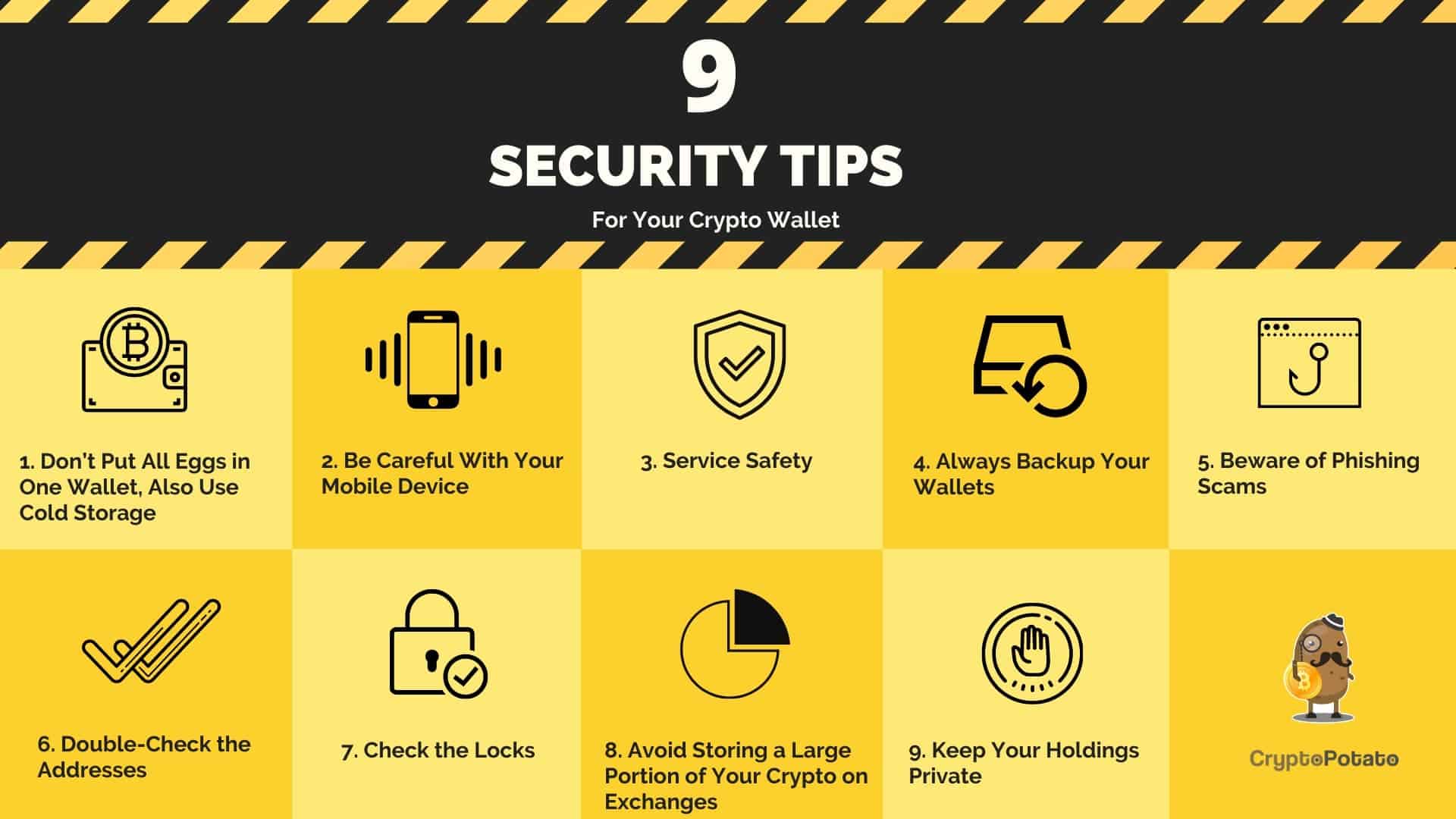
Image credit: CryptoPotato security tips infographic
15 More Powerful Tips to Protect Your Crypto Wallet
Here is an expanded list you can print or save:
- Spread your holdings across multiple wallets and chains.
- Use a password manager for all exchange and wallet logins.
- Avoid public Wi-Fi for transactions.
- Read every single word in transaction previews.
- Ignore “urgent” crypto messages from strangers.
- Verify every contract address on official sources.
- Test small transactions first with new projects.
- Keep most assets in cold storage.
- Never approve unlimited spending unless absolutely necessary.
- Use burner wallets for airdrop hunting.
- Follow only verified project accounts.
- Enable all security notifications in your wallet app.
- Review transaction history weekly.
- Join reputable crypto security communities for latest warnings.
- Consider hardware wallet + multisig for anything over 10,000 dollars.
Each of these tips adds another layer. Together they make you almost impossible to drain.
Common Mistakes That Get Wallets Drained (And How to Avoid Them)
Mistake 1: Thinking “it won’t happen to me.” Everyone thinks that until it does.
Mistake 2: Clicking shortened links (bit.ly, etc.) without expanding them first.
Mistake 3: Saving seed phrase in digital form.
Mistake 4: Approving transactions while tired or distracted.
Mistake 5: Trusting “verified” badges on fake sites.
Avoid these by building slow, careful habits.
Frequently Asked Questions About Protecting Your Crypto Wallet
Can drainers steal from hardware wallets? Only if you physically confirm the bad transaction on the device. The keys stay safe. That is why hardware is so powerful.
Is it safe to use MetaMask? Yes, when you follow all the rules above. The wallet itself is fine; the danger comes from where you connect it.
How often should I revoke approvals? At least once a month, or right after using any new DeFi platform.
What if I already clicked a suspicious link? Disconnect immediately, revoke approvals, move funds, and monitor for 48 hours.
Are there any free tools to check if my wallet is safe? Yes—revoke.cash, Wallet Guard, Etherscan token approval checker, and your wallet’s own security dashboard.
Do I need to pay for security software? Basic protection is free. A good paid antivirus with web protection is worth it for peace of mind.
Can I recover drained funds? Rarely. Blockchain transactions are final. That is why prevention is everything.
Is Solana safer than Ethereum? No. Drainers work on both. The chain does not matter—your habits do.
Should I use a new wallet for every project? For high-risk activities, yes. It limits damage.
What is the safest way to store large amounts long term? Hardware wallet in a safe, seed phrase split and stored in two secure physical locations, multisig if possible.
Start Protecting Your Crypto Wallet Today
You now know more about drainer attacks than 95% of crypto users. That knowledge is power. The difference between losing everything and sleeping peacefully at night is just a few simple habits.
Begin today. Open your wallet. Check approvals. Move big holdings to hardware if you have not already. Bookmark your favorite sites. Set a monthly reminder to review security.
Crypto can change your life for the better, but only if you keep it safe. Protect your crypto wallet like it is the most valuable thing you own—because right now, it probably is.
Stay safe out there. The next big bull run is coming, and you want to enjoy it with your funds intact.
Share this content:









Post Comment