TOP 6 DLP Tools to Prevent Data Loss in 2025
Top 6 DLP Tools to Prevent Data Loss in 2025
In the modern digital age, companies are dependent on data. The customer information, financial records, intellectual property, and strategic plans are all data at the core of every decision. However, there comes with it lots of data and lots of responsibility. This valuable information is being threatened on a daily basis due to cyberattacks, accidental leaks, and insider threats. One data breach may lead to loss of money, legal actions and a tarnished image for a company in the long run.
Data Loss Prevention (DLP) applications are aimed at assisting companies in securing their sensitive data. By 2025, when cyber threats will also be more advanced, it will no longer be sufficient to use simple antivirus or firewall. To remain secure, businesses should have an important DLP strategy.
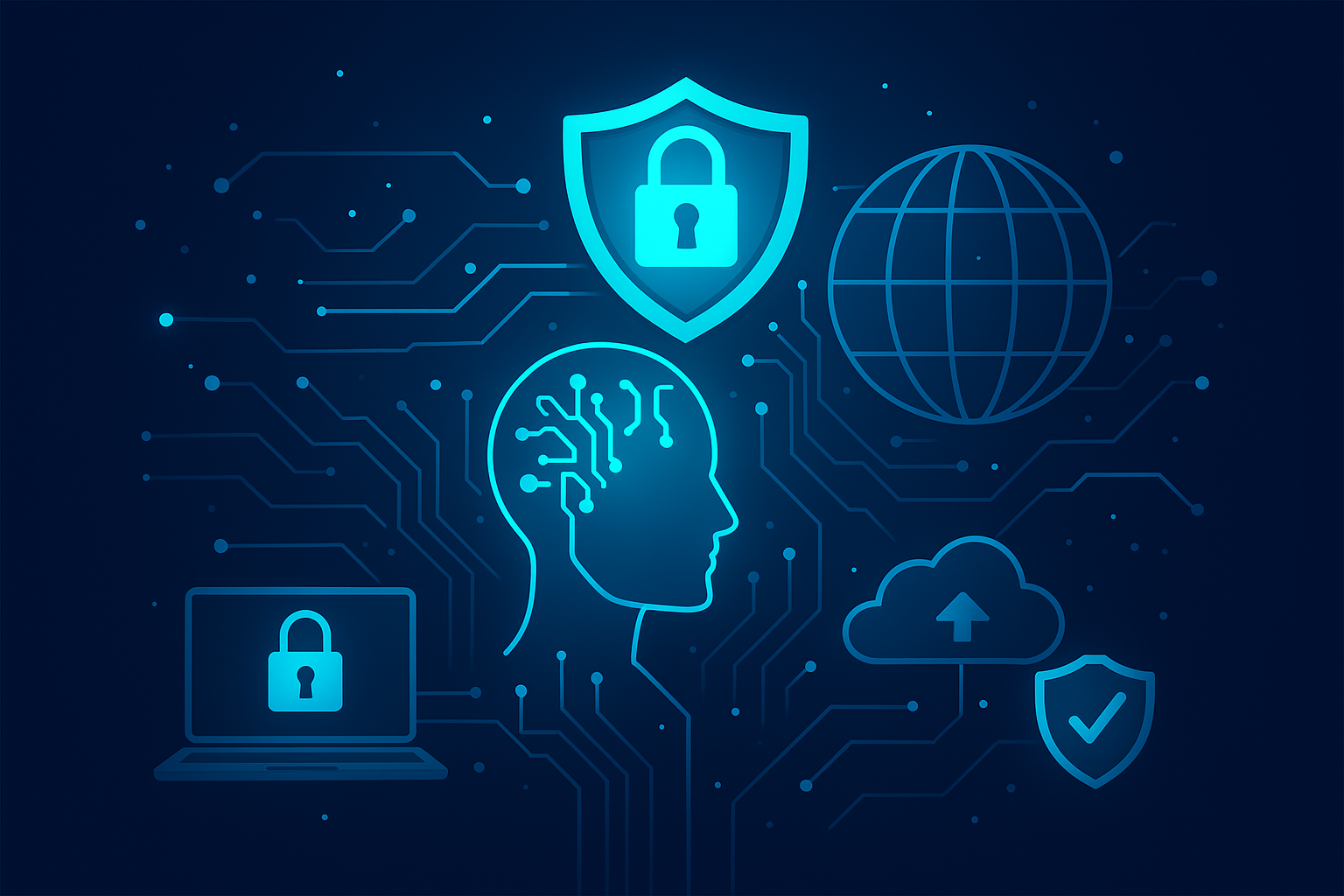
DLP tools not only offer data protection but also make sure that they are compliant with the regulations such as GDPR, HIPAA, and CCPA.
Key Features of Modern DLP Tools
1. Discovery and Classification of Data
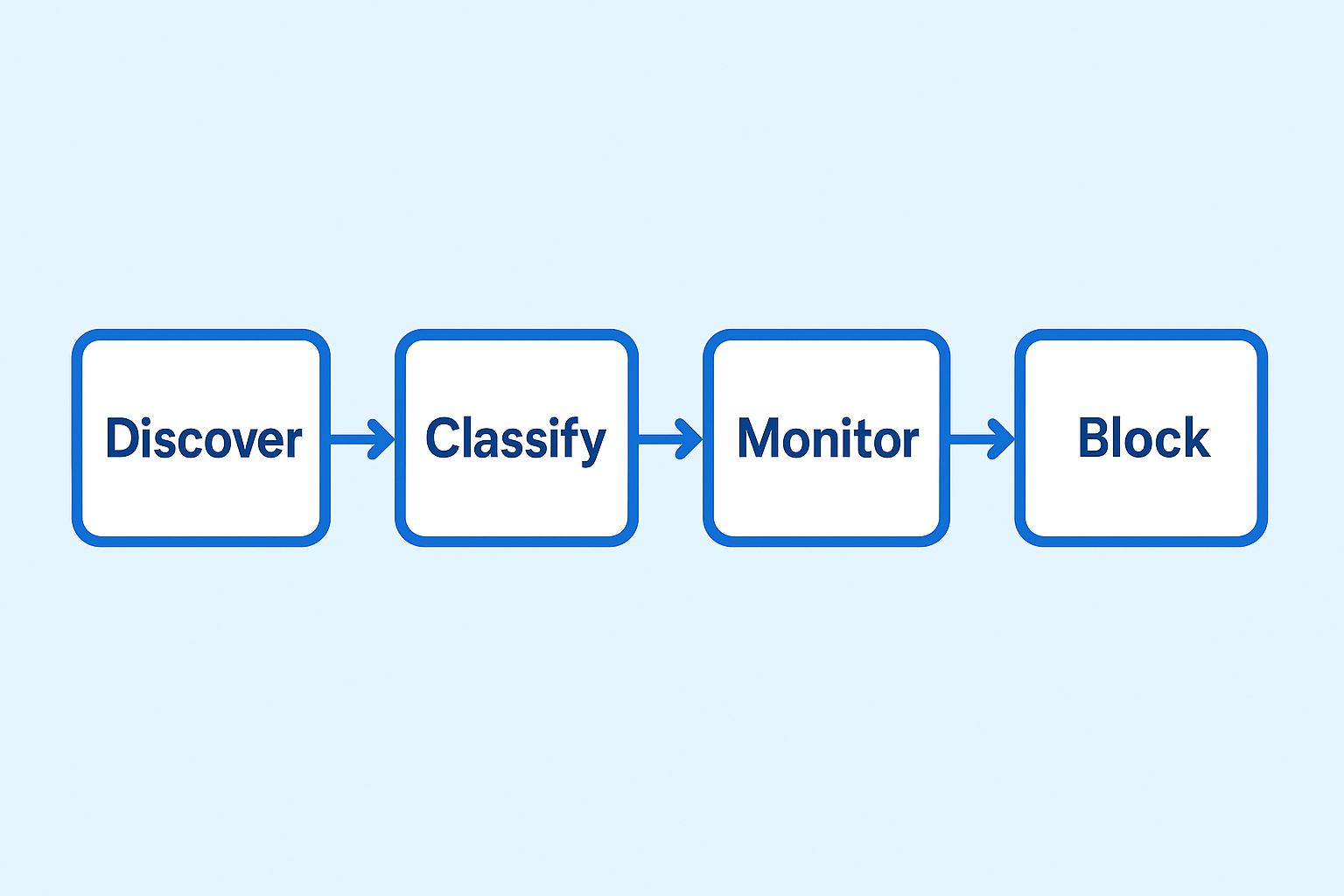
The current DLP tools will be able to scan your network, endpoints, and the cloud to discover sensitive information. They separate the data according to the risk levels. This would aid the companies in prioritizing the safeguarding of the most vital information initially.
2. Live Observation and Notifications
DLP devices track the traffic of your network. There are alerts that are aroused by suspicious activities. Real-time monitoring enables the IT teams to be fast-responding before data is out of the organization.
3. Policy Enforcement
DLP solutions allow you to make policies regarding the utilization of data. You can prevent unwarranted transfer and printing of confidential files and even prevent outbound mail. Security policies are implemented to make sure that employees adhere to security policies.
4. Cloud, Endpoint and Network Protection
- Endpoints: There are Laptops, mobile devices and desktops that are secured.
- Cloud: Scan SaaS, e.g. Microsoft 365 and Google Workspace.
- Network: Prevent network threats and identify them.
Top DLP Tools to Watch in 2025
1. Symantec Data Loss Prevention.
Symantec is a DLP market leader. It safeguards valuable information at both endpoints and networks as well as cloud applications. The software finds and categorizes data automatically. It also offers reports and analytics in detail. Symantec has a powerful policy on enforcing sharing, which does not allow unauthorized sharing. It can be easily integrated with the existing IT systems.
Workflows are also customized in the tool. This assists security staff to react to the incidents quicker. Its high sensitivity eliminates false positives. Symantec is applicable in an organization that deals with a large amount of sensitive information.
2. McAfee DLP Total Protection.
McAfee Total Protection observes the information on networks and devices. It does away with unintentional leakages and insider threats. The tool has good encryption capabilities. The data safety in the hybrid environment is guaranteed by integration with cloud services. Alerts and notifications are also available in McAfee. Data can be traced by the security teams using detailed dashboards.
The software has the ability to use policy templates, which are easy to deploy. It is easy to manage due to its intuitive interface. McAfee best suits those companies that have sophisticated IT and endpoints.
3. Forcepoint DLP
Behavior analytics is used by Forcepoint DLP in detecting risky user behaviors. It identifies abnormal data transfer and notifies the administrators accordingly. The tool provides cloud security, endpoint security, and network security. Contextual policy enforcement is also available in Forcepoint. Forcepoint is highly adaptable to fit the business policies.
With the integration of AI, there is better detection with time. The large and medium businesses enjoy the best of its strong monitoring capabilities. The software is also a time saver for the IT teams by eliminating false positives.
4. Digital Guardian
Digital Guardian is a company that safeguards intellectual property and trade secrets. It keeps track of endpoints, networks and cloud storage. The policies may be enforced on file, folder or user level. The tool involves the use of real-time alerts to avoid unauthorized access or transfer. It is also encryption and data masking supportive.
The company of interest is the one involved in tech, R&D, and manufacturing. Digital Guardian is suited. The solution assists in enforcing in-house security policies. It also helps in the adherence to industry regulations. Digital Guardian has been praised for having good control of sensitive corporate information.
5. Trend Micro Integrated DLP
Trend micro offers DLP as a subset of its entire security offering. It includes endpoints, email and cloud environments. The tool avoids data leaks, and the workflows are not disrupted. Trend Micro provides the possibility to use templates of policies. It also combines with the other security tools, making it less complex.
The software is also able to track user activity and file movement on a real-time basis. The reporting dashboard created by Trend Micro is simple to operate when working with a small- and mid-sized company. This is a user-friendly DLP tool that is affordable. Trend Micro would suit organizations that require a simple yet quality solution.
6. Microsoft Data Loss Prevention Purview.
Microsoft Purview is also compatible with Microsoft 365 applications, including OneDrive, Sharepoint, and Teams. The tool recognizes sensitive information automatically. Purview is able to provide detailed compliance audit reports.
Inbuilt templates enable IT teams to deploy policies in a short time. The solution is effective for companies that are already using Microsoft products. Notifications and alerts are used to avoid dangerous behavior. Microsoft Purview can be extended and adapted to the needs of any business.
How to select the Right DLP Tool in your Business.
- Company size: Larger companies may have more advanced tools that may be needed, but SMBs may prefer simpler tools.
- Type of information: Financial, personal and intellectual data may require a different level of security.
- Budget: Consider initial expenditure, license and maintenance expenses.
- On-premise, hybrid, or cloud deployment type.
Conclusion
The privacy of information is paramount to the companies in 2025. DLP tools are necessary in tracking, identifying, and eliminating unauthorized access to essential information. The selection of the appropriate tool is based on the size and type of data of your company and IT infrastructure.
The stress is employee training, policy refresh, and modern DLPs to make sure that your organization remains safe and compliant.
A secure DLP solution will allow businesses to avoid expensive data breaches, ensure trust, and avoid cyber threats.
FAQs
What is the comparison of DLP with the traditional antivirus software?
Antivirus is applied to resist malware and viruses. DLP is applied to guarantee the prevention of the unauthorized entry or transfer of sensitive data.
Can DLP ensure data safety in the cloud?
Yes. New DLP tools are able to monitor and secure the data within the cloud applications. These include Microsoft 365, Google Workspace, and Salesforce.
How much does a DLP tool cost?
Prices will differ in accordance with provider, features, and size of company. Depending on the size of the business, the price may be in the range of several thousand dollars to tens of thousands in the case of the enterprises.
Should small businesses have DLP?
Yes. Sensitive customer or financial data is even stored by small businesses. Breach may be expensive and devastating.
What sort of data do you suggest should be prioritized as being safeguarded?
Pay attention to personal data, financial data, intellectual property and trade secrets.
Share this content:



Post Comment